
Search New York Family Court Records
New York family court records cover cases heard in Family Courts across all 62 counties. These records deal with custody, child support, paternity, family offenses, and more. You can search for family court records by visiting the courthouse where the case was filed or by using the state's online tools. The WebFamily case search system lets you look up case info by name or docket number. Each county has its own Family Court with a clerk who keeps all case files. For copies of orders or other papers, you contact the clerk of court in the right county. Some records need a court order to see, but parties to a case can get copies at the Record Room with valid ID.
New York Family Court Records Overview
Where to Find New York Family Court Records
Family Court records in New York are kept at the courthouse where the case was heard. Each of the 62 counties runs its own Family Court under the New York State Unified Court System. The clerk of court in each county keeps all case files, orders, and related papers. If you need a copy of a court order, you go to the Record Room at the right courthouse. Bring photo ID. The clerk can pull your file and make copies while you wait. For counties in New York City, the five boroughs each have a separate Family Court building with its own clerk and record room.
The state also runs online tools that help with record searches. The WebFamily system gives you access to case info for Family Court and Integrated Domestic Violence (IDV) courts. You can search by case number or party name. The system shows case status, court dates, and basic case details. It does not show the full file. For that, you need to go in person or send a written request to the clerk.
NY CourtHelp is another good starting point. It walks you through how to get court records step by step. The site tells you which clerk to call and what forms you may need. It also links to the eCourts system for case tracking.
Note: Family Court records are not open to the general public like most other court files. Under Family Court Act Section 166, the court decides who can see the records on a case by case basis.
How to Search Family Court Records in New York
There are a few ways to search for family court records in New York. The method you pick depends on what you need and how fast you need it. Online tools work well for checking case status or finding a docket number. In-person visits are the way to go when you need certified copies or want to look through the full file.
The NYC Family Court portal has info on how each borough's court works. It lists hours, addresses, and phone numbers for all five New York City Family Courts. The site also explains who can get copies of court orders and how to request them from the Record Room.
You can see a snapshot of the NYC Family Court overview page here.
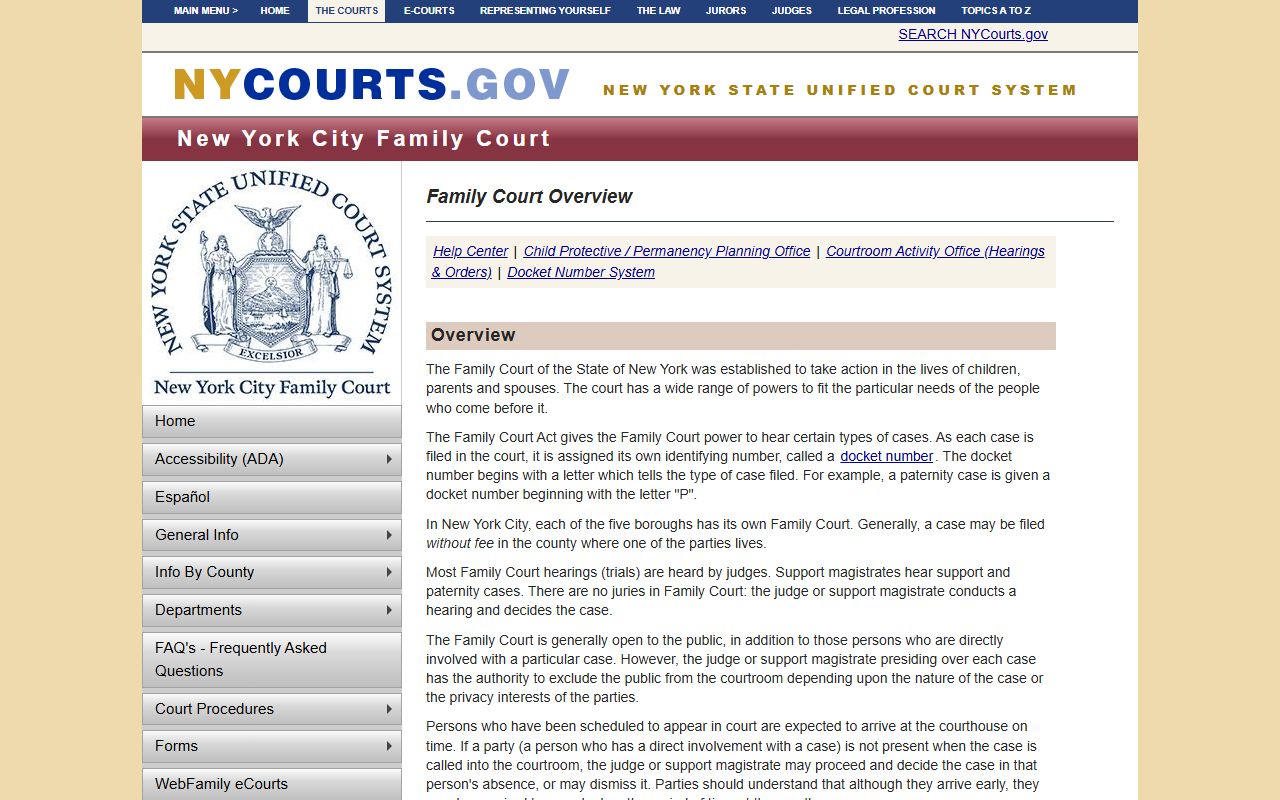
That page covers the basics of how the court works, what types of cases it hears, and where to go for help.
For e-filed cases, the NYSCEF system lets you search and view documents that were filed online. NYSCEF stands for New York State Courts Electronic Filing. There is no fee to use it. You can file, serve, and view documents any time of day. The system sends alerts when new papers are added to a case. Right now, NYSCEF handles custody, visitation, guardianship, paternity, and support cases in Family Court.
Here is a look at the NYSCEF e-filing rules page.
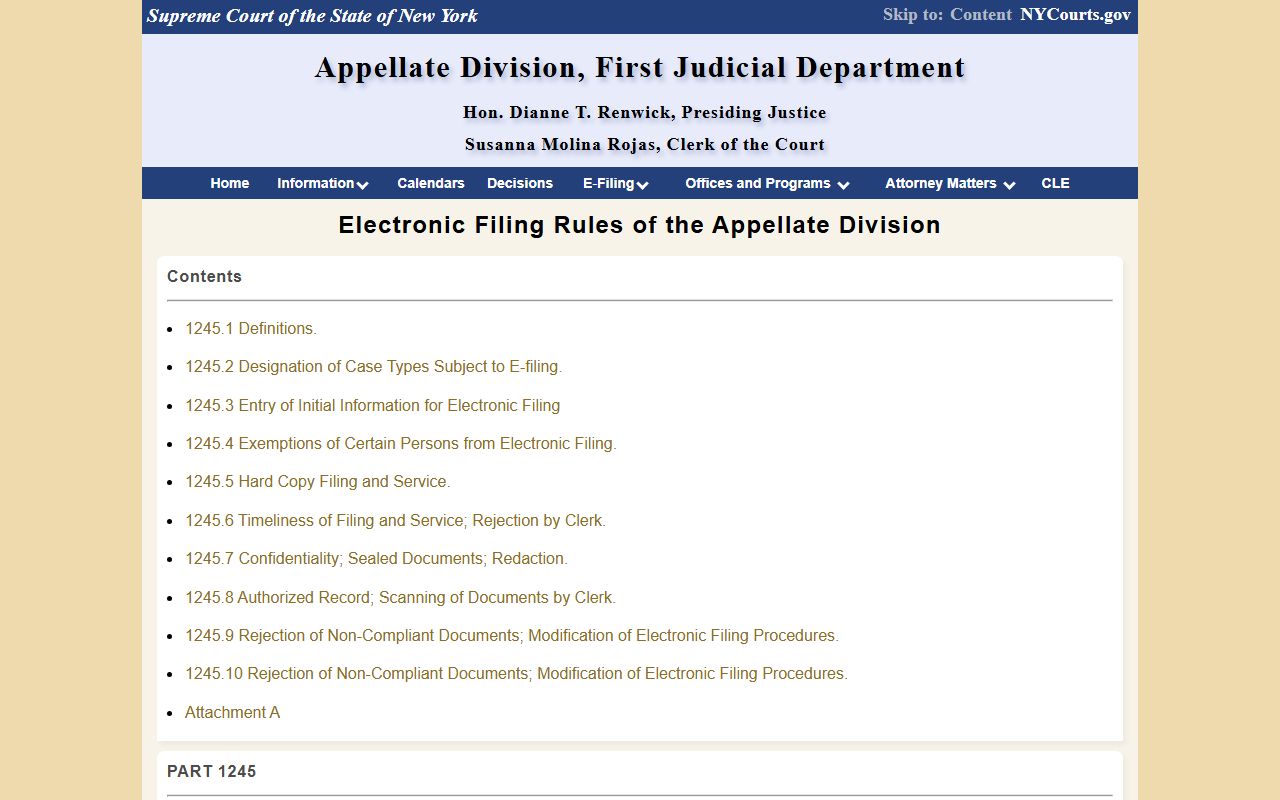
The rules page spells out how e-filing works, when a document counts as filed, and how service happens through the system.
To search family court records in New York, you typically need:
- The full name of at least one party to the case
- The county where the case was filed
- A case or docket number if you have one
- Photo ID if you visit the courthouse in person
New York Family Court Records and Privacy
Family court records in New York are not public in the same way that most other court files are. Family Court Act Section 166 says these records "shall not be open to indiscriminate public inspection." That does not mean they are sealed. It means the court has the power to decide who gets to see them. Parties to the case and their lawyers can get access. So can certain agencies that are part of the case. Anyone else needs to ask the court for permission.
Here is a look at the statute text on FindLaw.
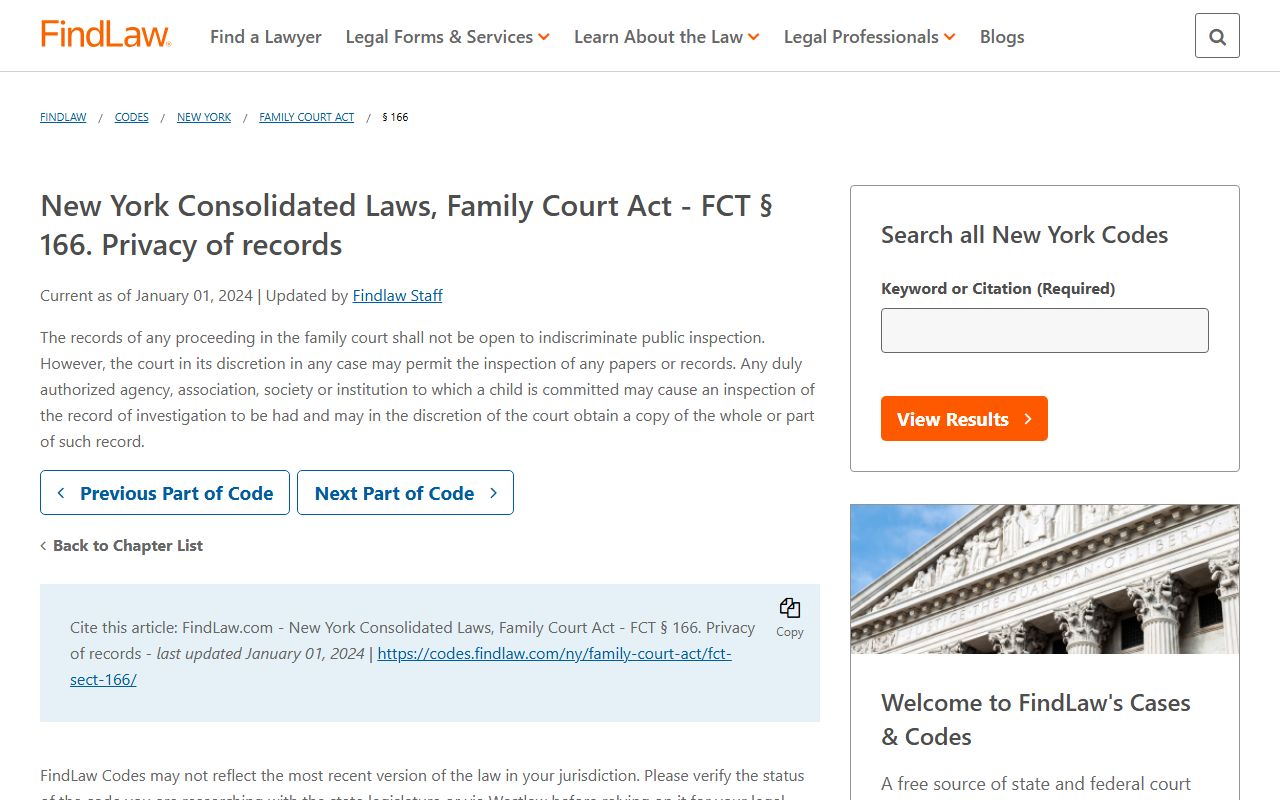
The statute gives judges broad power to let people see records when there is a good reason. It is not a full ban on access.
The rules for who can see what are spelled out in 22 NYCRR Section 205.5. Under this rule, the following people can see pleadings, orders, decisions, and hearing transcripts without needing a court order: the petitioner, the adult respondent, and their lawyers. If a child is part of the case, the parents, the child's lawyer, the guardian ad litem, and any agency with custody can also get access. Prosecutors can see records if a related criminal case is pending, too.
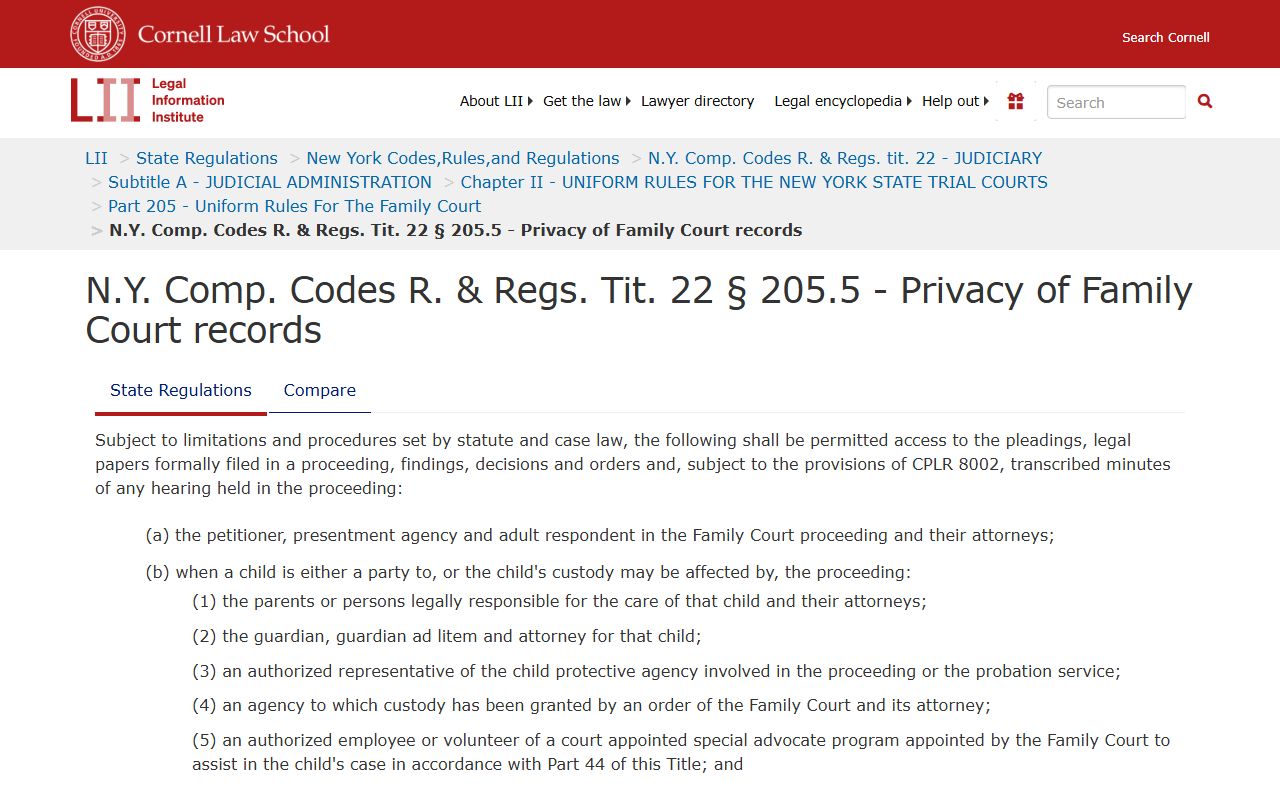
The Cornell Law page lays out the full text of the regulation, including rules about address confidentiality and limits on sharing records outside the case.
Address confidentiality is a big deal in family court. Under Family Court Act Section 154-b(2), a party can ask the court to keep their address secret. If the court grants it, the address gets removed from all court papers. New York also runs a statewide Address Confidentiality Program for victims of domestic violence who have moved for safety. If you are in the program, your address stays off court papers, government records, and even your license.
Types of New York Family Court Records
Family Courts in New York handle a wide range of cases. The court has the power to hear matters that deal with children and families, but it cannot grant a divorce. Only the Supreme Court can do that. The types of cases that produce family court records in New York include custody and visitation, child support and spousal support, paternity, adoption, guardianship, family offenses (domestic violence), child protective cases for abuse and neglect, foster care placement and review, juvenile delinquency, persons in need of supervision (PINS), and termination of parental rights.
Each type of case creates its own set of records. A custody case will have petitions, hearing transcripts, and a final order. A child support case has financial paperwork and a support order from a magistrate. The Family Court Act Section 216-a says each county must have a clerk of court who keeps all these records and manages the court seal.
The clerk's office in each county also has official forms for every type of case. These include petition forms, affidavits, and sample orders. The forms are free. Clerks can also help you fill out forms if you are filing on your own, which is a long-standing practice in New York courts.
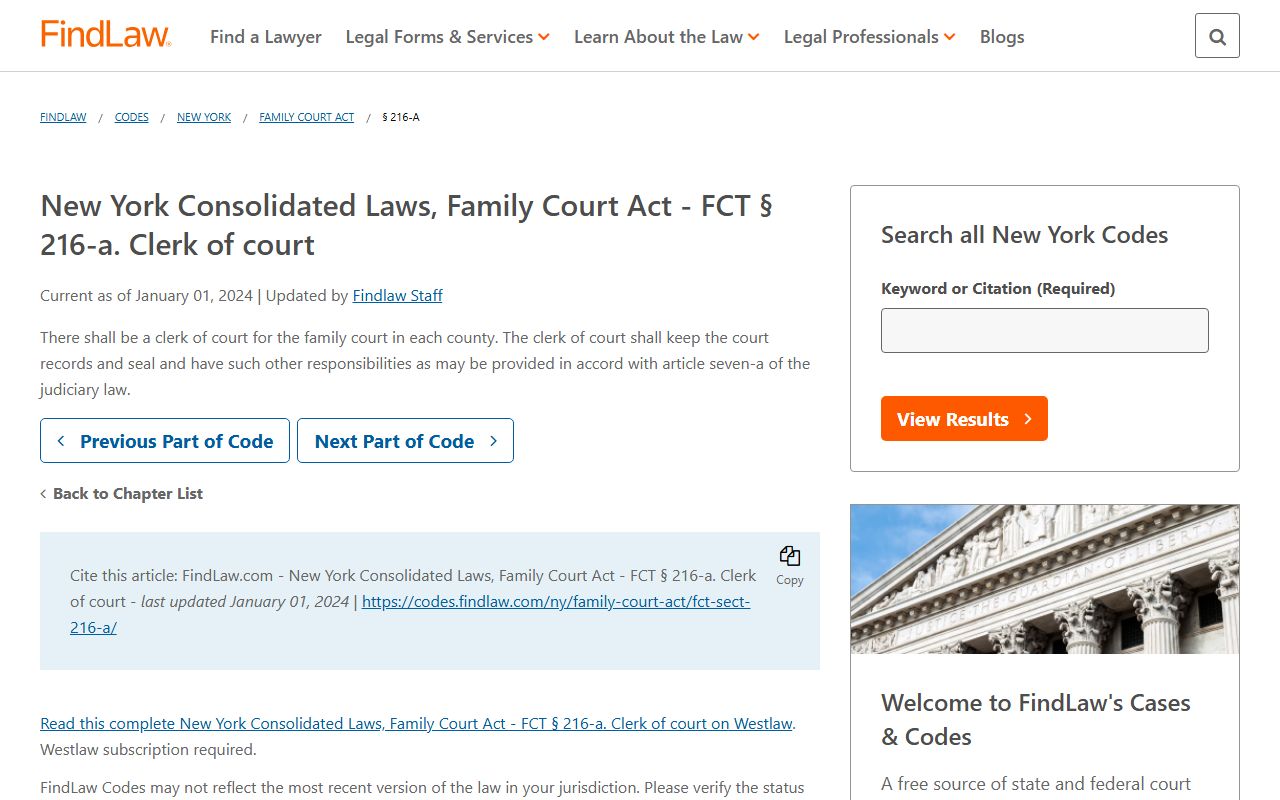
That statute page shows the duties of the clerk, who is the main point of contact for anyone looking for family court records in a given county.
How to Get Copies of Family Court Records
Getting copies of family court records in New York depends on your role in the case. If you are a party, you can go to the Record Room at the courthouse where the case was heard. Bring photo ID. The clerk will pull the file and let you review it. You can ask for copies of specific documents. There is no filing fee for Family Court cases in New York, but there may be a per-page charge for copies.
If you are not a party, you need to ask the court for access. File a written application that explains why you need the records and what you plan to use them for. The judge will review the request and decide if there is a good enough reason. This is not a guarantee. The court weighs privacy concerns against the public interest.
Transcripts work a bit differently. All court hearings are recorded by a court reporter or an electronic device. To get a transcript, you must be a party or an attorney of record. You fill out a Request for Transcript form and submit it to the court. For hearings that were recorded electronically, you contact an outside transcription service. These are independent contractors who set their own rates and turnaround times. The court keeps a list of approved firms.
Some counties accept written requests by mail. Include your name, the case number or party names, the specific documents you want, and a phone number where the clerk can reach you. Wait times vary by county. In-person requests tend to be faster.
Family Court Records by Judicial District
New York splits its 62 counties into judicial districts. Each district has its own set of location-specific forms and local rules. Knowing which district your county falls in helps when you are looking for forms or trying to reach the right office. The 3rd Judicial District covers Albany, Columbia, Greene, Rensselaer, Schoharie, Sullivan, and Ulster counties. The 4th covers Clinton, Essex, Franklin, Fulton, Hamilton, Montgomery, Saratoga, Schenectady, St. Lawrence, Warren, and Washington. The 6th covers Broome, Chemung, Chenango, Cortland, Delaware, Madison, Otsego, Schuyler, Tioga, and Tompkins. The 7th includes Cayuga, Livingston, Monroe, Ontario, Seneca, Steuben, Wayne, and Yates. The 8th covers Allegany, Cattaraugus, Chautauqua, Erie, Genesee, Niagara, Orleans, and Wyoming. The 9th handles Dutchess, Orange, Putnam, Rockland, and Westchester. The 10th covers Nassau and Suffolk.
E-filing through NYSCEF is now mandatory for certain case types in many of these districts. The specific case types vary by county. Check with your local court or visit the NYSCEF site to see what applies in your area.
Browse New York Family Court Records by County
Each of New York's 62 counties has its own Family Court that handles cases for residents in that area. Pick a county below to find the court's address, phone number, and local resources for family court records.
Family Court Records in Major New York Cities
Residents of major cities file family court cases at the Family Court in their county. Pick a city below to find out which court handles family court records in that area.